Where you hold stock matters more than how much you hold.
A buffer in the wrong place costs money and protects nothing. A few in the right places protect the whole network.

It usually isn't the forecast. It's where your stock sits. Place buffers on a seven-node supply chain, run 90 days of demand, and see what your decisions do to service, stock and cash.
Free. Runs in your browser, phone included. About ten minutes.
The rules are simple. The results usually surprise people who have planned supply chains for years.
A buffer in the wrong place costs money and protects nothing. A few in the right places protect the whole network.
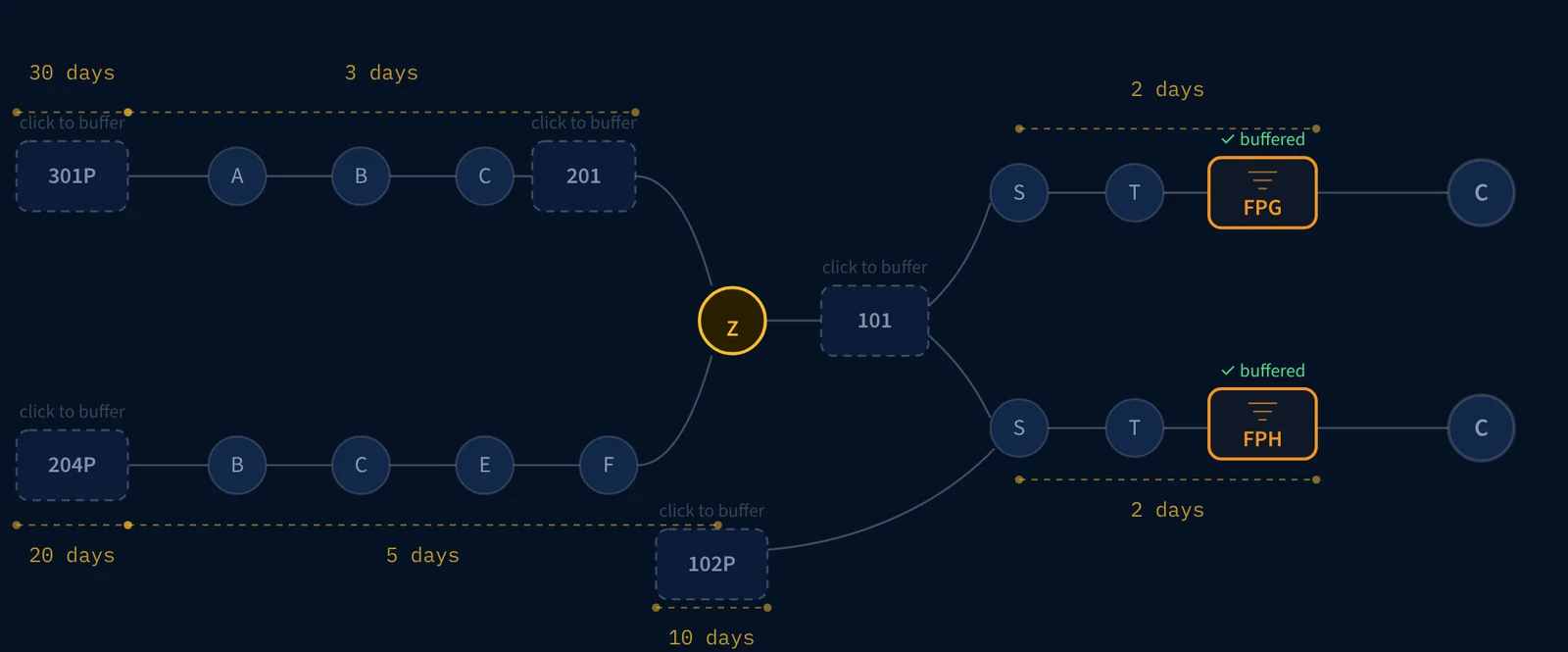
Leave the middle of the network unprotected and every finished product has to cover the longest upstream path. In the case network that's 40 days instead of 2.
If customers will wait and the parts are protected, you can build to order and hold no finished stock at all.
Four steps, each one on its own screen. You can change your design and run it again as often as you like.
Three purchased parts, a part sold straight to a service market, a skilled assembly step and two finished products. Note the lead times and where variability comes from.
Decide where to hold stock using the six DDMRP positioning criteria, from customer tolerance time to protecting the critical operation.
Set each buffer's average daily usage and factors, watch the zones update, then run 90 days with demand spikes and late suppliers.
Service across three markets, buffer health, stock tied up and a scored debrief. Compare runs, and see the reference design after your third run.
Kiira Consulting helps South African manufacturers plan to actual demand instead of forecasts. We implement Demand Driven MRP and Demand Driven Operating Models, and we're an Intuiflow partner.
Our DDMRP Diagnostic Workshop looks at your own products, lead times and demand, and shows where buffers belong and what that would mean for service and working capital.